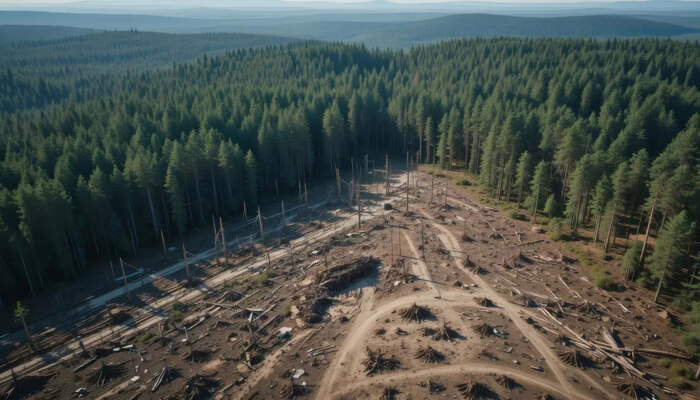
82% Net Zero target has not been verified by scope 3 emission data, so a critical issue in corporate climate strategies
Although corporate sustainability ambitions are increasing, most of the Net Zero targets have not been verified. In Asia-Pacific, although 53% of the company has committed to Net Zero, only 18% has been validated by Science-Based Targets Initiative (SBTI), according to the PWC 2025 climate report. Without credible data scope 3, this commitment is at risk of being considered as ‘Greenwashing’.
In critical industries, scope 3 emissions accounted for more than 90% of total emissions. This includes the effects of upstream and downstream such as deforestation, the use of agricultural inputs, transportation, and waste disposal. But most companies still rely on generic emission factors or expenditure -based models, not collect specific data from suppliers and locations. Dependence on this average data creates a large credibility gap, damages climate strategies, and exposes companies at risks of regulations under the framework such as EU Corporate Sustainability Reporting Directive (CSRD) and ISO 14068.
The Koltiva answers this gap by combining a sophisticated digital desert system with field verification. Through the MIS coltitrace platform, Land Use Tracker, and integration of Cool Farm Tools, colliva provides verified emission data to the land level for fragmented supply chains. This allows companies not only to comply with SBTI Flag requirements but also involve producers in real climate action.
PWC-NUS Business School study (2025) revealed that 53% of companies in Asia-Pacific have set a net zero target, but only 18% have been independently validated by SBTI. Even fewer companies report scope 3 emissions, even though these emissions usually cover more than 90% of the company’s climate traces.
This condition creates a wider gap of trust. Investors are increasingly skeptical of “targets on paper” without evidence of concrete progress, while consumers demand proof that sustainability claims reflect reality, not just aspiration. Without transparent verification, this commitment is at risk of being perceived as greenwashing.
Why Scope 3 Becomes the Biggest Challenge
Scope 1 and 2 emissions from company and energy facilities purchased are relatively easy to calculate. However, the biggest challenge is in Scope 3: Indirect emissions that occur throughout the supply chain. This includes deforestation due to the supply of raw materials, the use of fertilizer in agriculture, logistics and transportation, to the disposal of products at the end of its life cycle.
For many companies, scope 3 emissions can reach tens of times from a combination of scope 1 and 2 (Marketwatch, 2024). However, most companies still depend on generic emission factors or expenditure -based models. The result is data that is increasingly questioned by regulators, investors, and auditors. Dependence on the average number disguises the reality of the supply chain, increases the risk of regulatory sanctions under CSRD and ISO 14068-1, and limits access to climate financing.
“Many companies set ambitious net zero targets, but the real challenge is how to prove it,” said Andre Mawardhi, Senior Manager of Agriculture and Environment in the Col. “Scope 3 cannot be handled only by estimated. Without data at the credible land level, targets are at risk of being considered just aspiration but without measurable progress.”
Field Facts: Why Verification Important
Experts emphasize that scope 3 measurements require a shift from generic average to specific and contextual data. Changes in land use, fertilizer applications, and logistics vary greatly in various regions. A single global model cannot capture this difference. Satellite imagery and digital tools have advanced, but without field validation, numbers can still be debated. Koltiva assigns a field agent and local agronomic who works directly with small farmers to ensure data reflects reality.
“Assessing emissions with farmers in the field gives us entry points for concrete changes,” Andre added. “Either by adjusting the use of fertilizer, improving land preparation, or changing plant waste into biochar, these practical steps reduce emissions while building trust. Producers become climate partners, not just data points.”
This dual approach, which combines digital lacking with verification at the field level, ensures that data disclosure is able to survive the supervision of regulators and investors while encouraging concrete repairs in the supply chain.
The colltival has developed a structured path that changes the company’s climate ambition into a verified action. This approach begins with compliance and verified documentation, mapping land to the level of polygons to ensure sources without deforestation and in harmony with SBTI Flag and ISO 14068-1. This is reinforced by the Digital Coltitrace MIS system, which captures direct emission data from land and suppliers, not from limited samples. This system is also integrated with the Cool Farm Tool, an international framework for calculating greenhouse gas emissions on the land, absorption of soil carbon, and the impact of biodiversity.
To maintain the integrity of the supply chain, colltiva ensures transparent reporting and separate handling, so that the free commodity deforestation and low carbon can still be traced from origin to the market. At the same time, companies empower producers with digital tools, smart climate training, and performance -based incentives, allowing farmers to reduce direct emissions in their sources. By integrating these elements, colltiva bridges the gap between field reality and reporting at the management level.
Needs and Opportunities for Compliance
Pressure is increasing along with the needs of reporting and environmentally friendly practices that are increasingly demanded. Regulations such as the EU Corporate Sustainability Reporting Directive (CSRD) require large companies to express scope 3 emissions in the annual report. Companies that fail to verify scope 3 face sanctions, damage to reputation, and are expelled from financing and market access. Conversely, companies that move earlier get the first advantage in the procurement and access to investment related to climate.
“Scope 3 is a place where climate action really occurs,” said Manfred Borer, CEO and Co-Founder of Coltiva. “Without transparency of supply chains, risk targets are risky to be a promise on paper. By combining technology and field involvement, we make sure the company does not only count but also reduces their emissions.”
“The verified scope 3 data is not only about compliance, but also a competitive advantage,” Manfred added. “Companies that are able to prove a real reduction will open access to climate financing, strengthen consumer confidence, and secure their position in the low -carbon economy.”
As an increase in supervision of the climate commitment of regulators, investors, and consumers, Scope 3 is a real test for the claim of corporate sustainability. Data verified at the field level offers a way to restore trust and prove that Net Zero is more than just a slogan.
About cultivation
Koltiva is a leading global company in sustainable agriculture and supply chain search, offering human -centered technology solutions and supporting solutions in the field by digitizing the agricultural business and helping small producers switch to sustainable practices that can be traced. As a provider of global technology, colliva builds ethical, transparent and sustainable supply chains, supporting companies to strengthen business resilience and transparency.
The colltiva helps their business and suppliers comply with applicable regulations and the demands of consumers around the world through a solution to the brushing. Operates in more than 94 countries and supported by a network of customer support offices in 21 countries, Koltiva supports more than 19,000 companies in building transparent and strong supply chains and empowering more than 1,900,000 producers to improve their welfare. www.koltiva.com
This press release has also been aired on Vritimes
News
Berita
News Flash
Blog
Technology
Sports
Sport
Football
Tips
Finance
Berita Terkini
Berita Terbaru
Berita Kekinian
News
Berita Terkini
Olahraga
Pasang Internet Myrepublic
Jasa Import China
Jasa Import Door to Door
Originally posted 2025-09-28 08:27:25.